TruSpark is Reasonics' platform for turning your organization's formal knowledge into verified, executable software. Its products span the full path — authoring and compiling knowledge, proving it correct, running it over live data, explaining it in plain language, and governing what you build, each usable as part of the whole, and some available on their own.
TruSpark is one platform. The names below are its working parts, never a catalogue to choose from. You adopt the platform, and these are the pieces you will hear named as you use it. Under one authoring experience, the core engines compile and run your knowledge, and OntoVerba™ makes it readable; Sequent™ and Tessera™ are built in throughout.
Knowing which part does what is useful for one practical reason: it tells you what to ask to see. Throughout, we keep three things distinct: a platform technology (an engine or tool such as OntoEnact™ or Tessera), a capability (what it lets you do — compiling verified knowledge, proving a workflow), and a generated output (what your teams receive, native SDKs, proof certificates, knowledge graphs).
Turn formal knowledge into production software your teams can trust.
OntoEnact compiles your organization's formal knowledge into build-ready software in C#, Java, Go, Rust, C++, and Python, but only after a portfolio of theorem provers proves the knowledge internally consistent. Nothing is generated that was not proved first.
Four phases turn your ontology into software. The fourth is a gate. That is why a contradiction surfaces as a failed build on a developer’s screen instead of as a defect in production.
One compiler interface handles parsing, sort inference, translation, and compilation, alongside validation, reasoning, and query. Source is CLIF (ISO/IEC 24707), grounded in BFO 2020 (ISO/IEC 21838-2) and emitted as SMT-LIB 2.7 for the prover portfolio. A module system assembles a theory from a directory and canonicalizes COLORE, OBO, and IOF dialects, so ontologies written in different conventions still arrive as one theory.
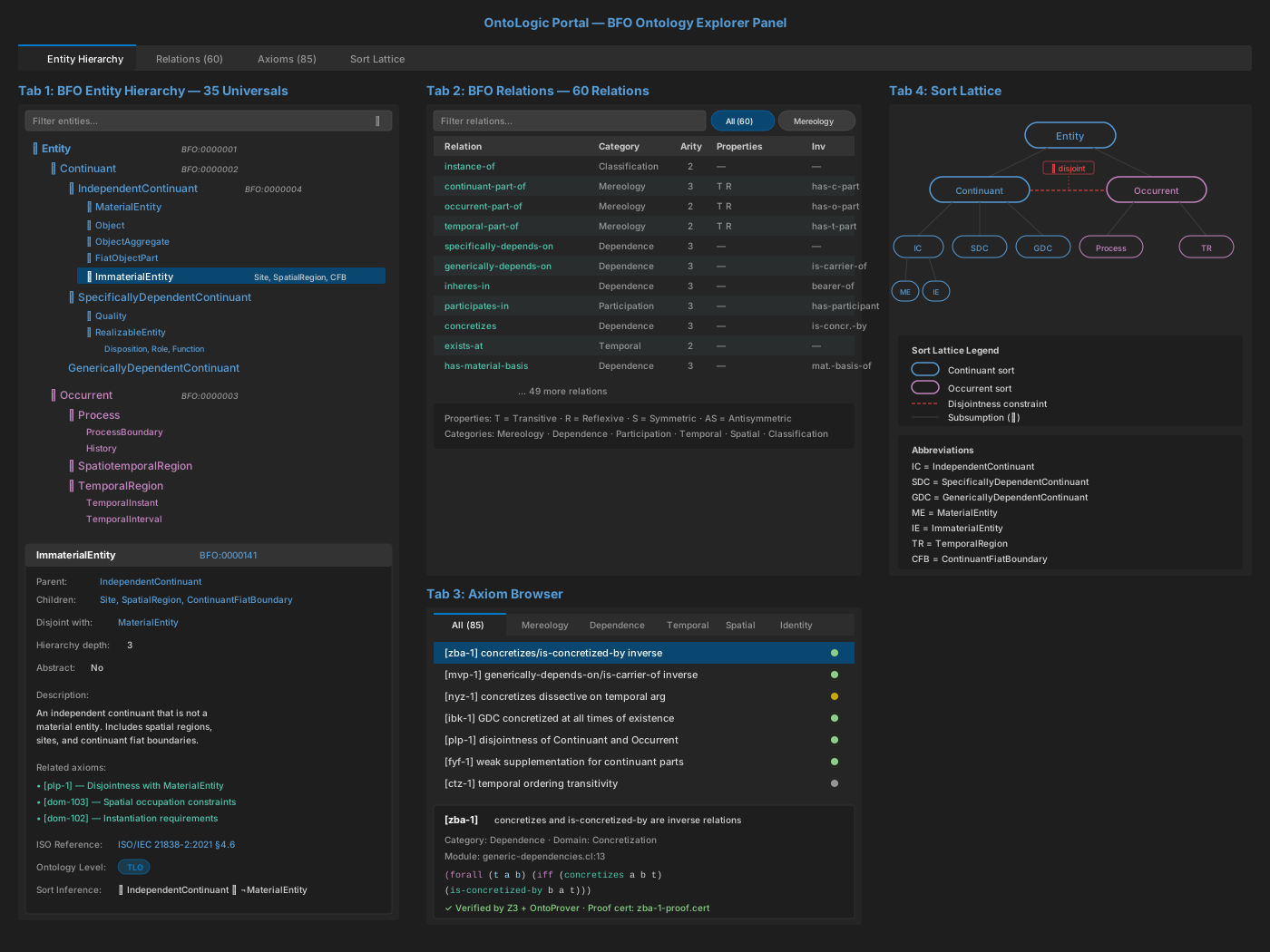
Knowledge is organized in four layers — top-level, mid-level, domain-level, and application-level, the arrangement ISO/IEC 21838-2 prescribes, so your domain work sits on standard foundations instead of a private hierarchy.
Nothing reaches your build that a prover did not accept.
Powered by OntoMotion™Reason over your live data in the same formal terms your knowledge was defined in.
Where OntoEnact compiles the ontology, OntoTelliect runs it — executing verified knowledge over real-world data at scale, where the graph structure comes straight from the proved ontology and is never maintained by hand.
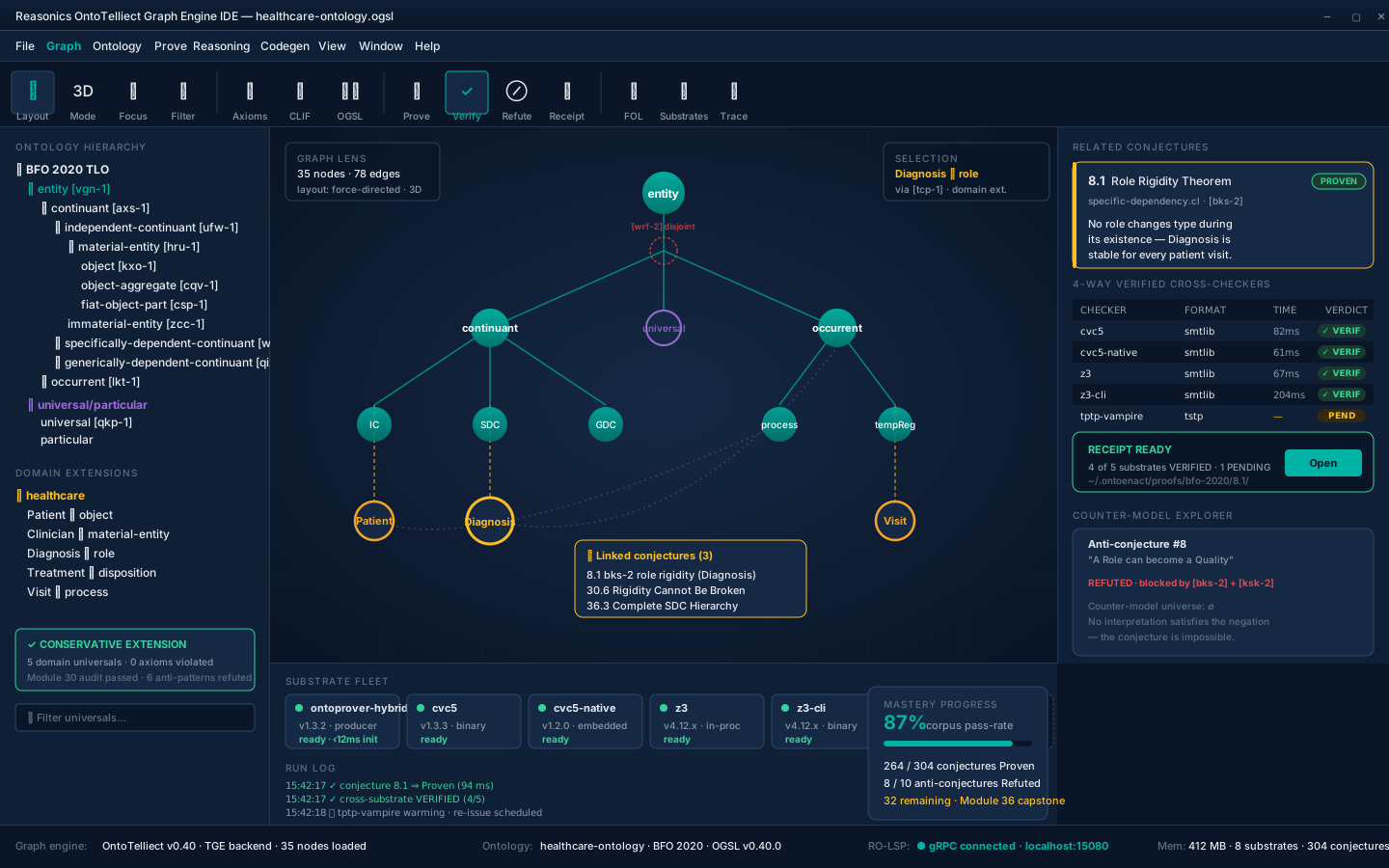
Four steps take a proved theory all the way to reasoning over live operational data, with no hand-written stage in between where meaning could be lost.
Structure comes from the proved ontology, so a relationship your knowledge rules out cannot be stored, the contradiction is refused as it is written, not discovered in an audit months later.
Every cell, edge, and traversal is BFO-typed, running on an eleven-year fork of Microsoft Trinity (SIGMOD 2013), the engine Microsoft Research reports running as a server cluster behind the Microsoft Knowledge Graph, also known as Satori. The type system in the running engine is the compiled ontology, never a schema maintained alongside it.
Because the storage schema is generated from verified knowledge, it cannot drift away from it, the usual gap between what a database enforces and what the business actually means never opens.
The OGSL schema language and its compiler derive the schema from verified CLIF, generate graph operations in five statically typed languages, and route verification back through the compiler. A trust-boundary classifier grades every conversion, so a definition that lost fidelity is labelled, never quietly accepted.
The coupling is deliberately one narrow seam: the graph engine reaches the compiler through a single SDK boundary — in-process, over the network, or automatically choosing between them. They are separate stacks, so the runtime can evolve without destabilizing the compiler, and verification behaves identically however it is reached.
A relationship your logic rules out has nowhere in the graph to live.
Powered by OntoMotion™Give your team a productive way to build and verify formal knowledge, without a logician on staff.
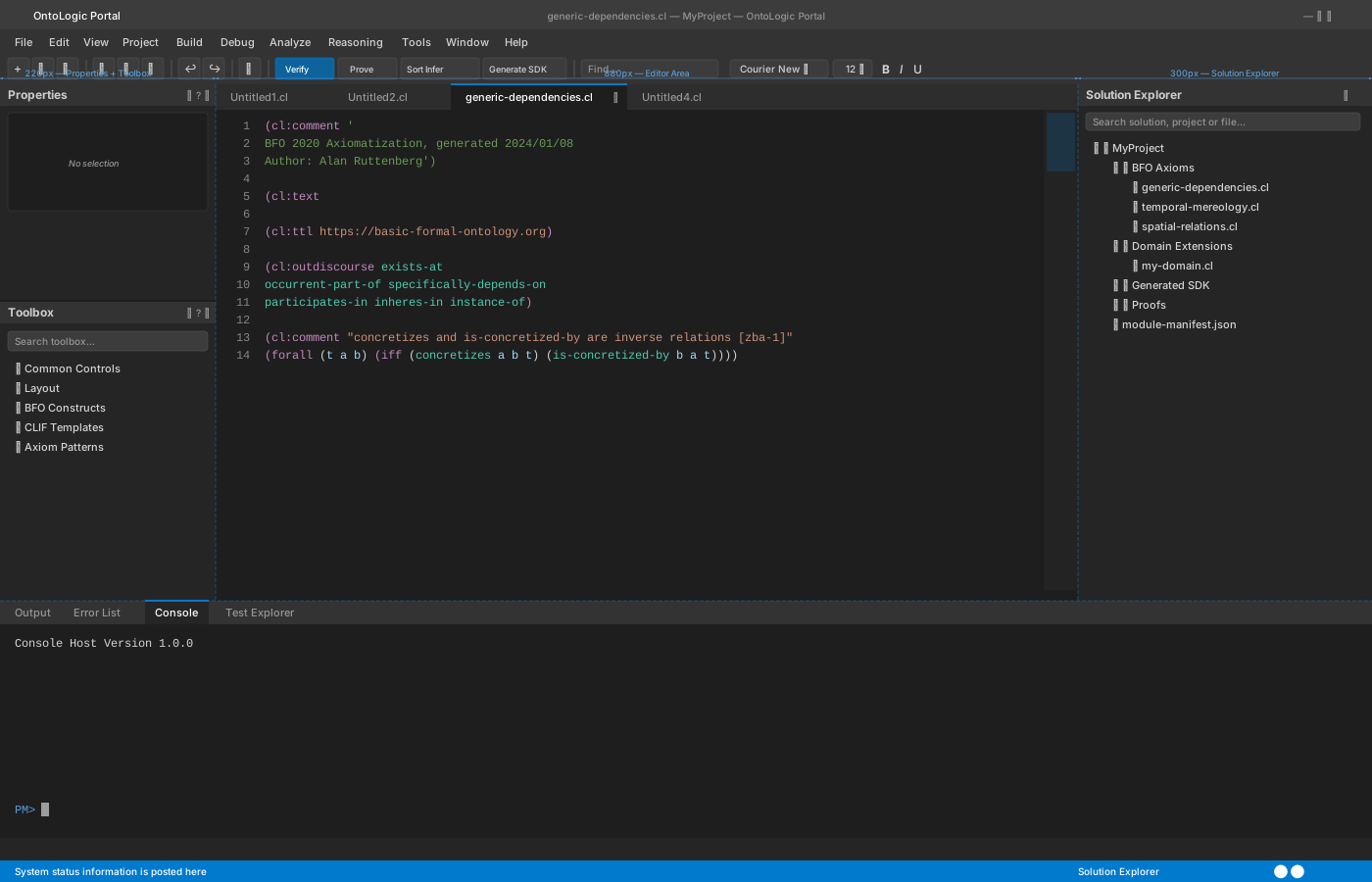
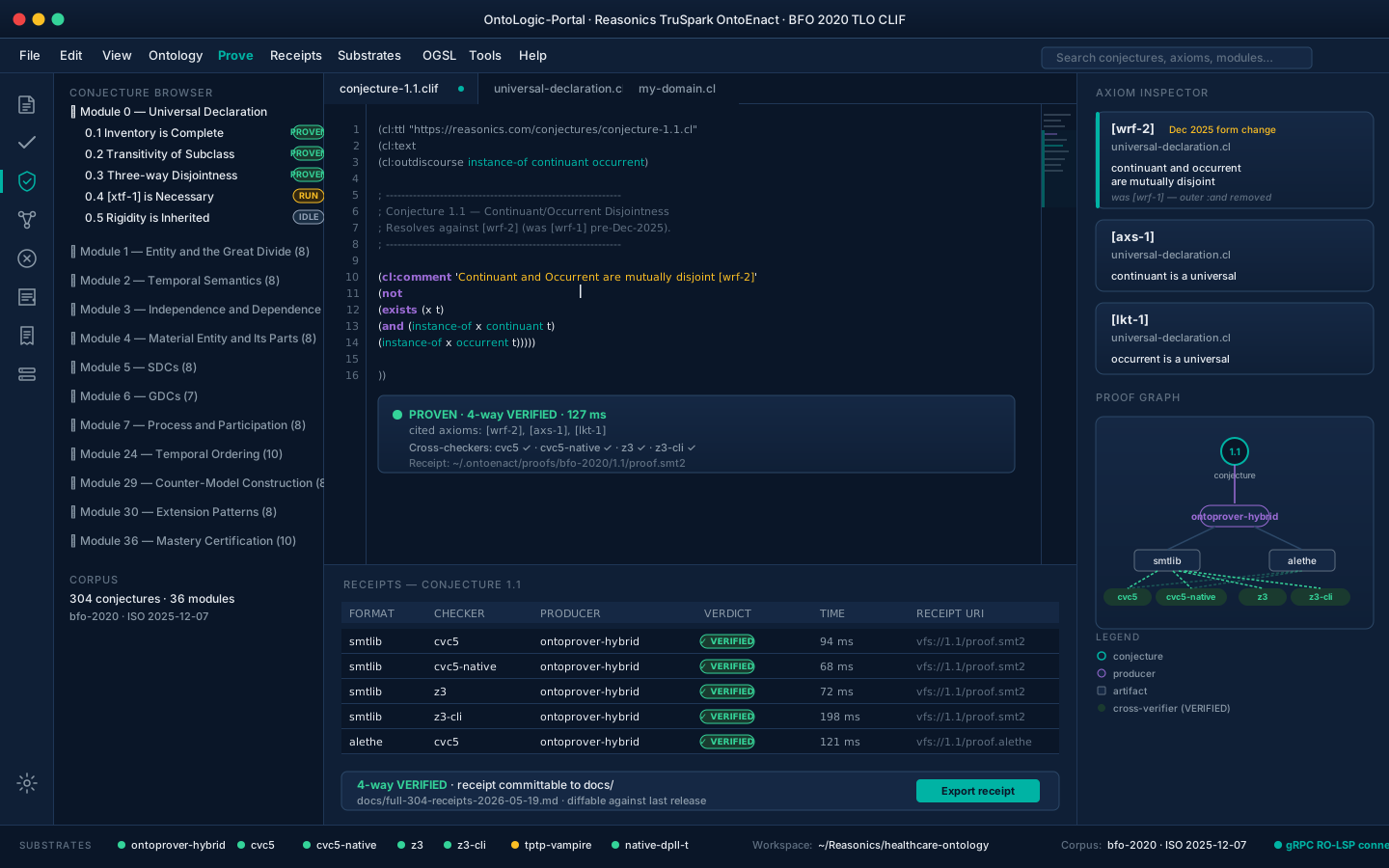
OntoLogic Portal is the authoring experience over the core engines. It is available as a command-line toolset today, with a visual IDE, live theorem-prover feedback as knowledge is authored, in active development.
Verification is part of editing, not a step afterwards. Your team finds out that a definition contradicts something the moment they write it, which is what makes formal knowledge practical for people who are not logicians.
Run one, run all, or let the portal choose. When a claim fails, you are shown a concrete counter-example, the specific case that breaks it, instead of a bare rejection you have to diagnose.
Z3, OntoProver™, CVC5, and Vampire run as peers and not as fallbacks, with counter-models, Craig interpolation, and full prover-disposition traces available beside the source.
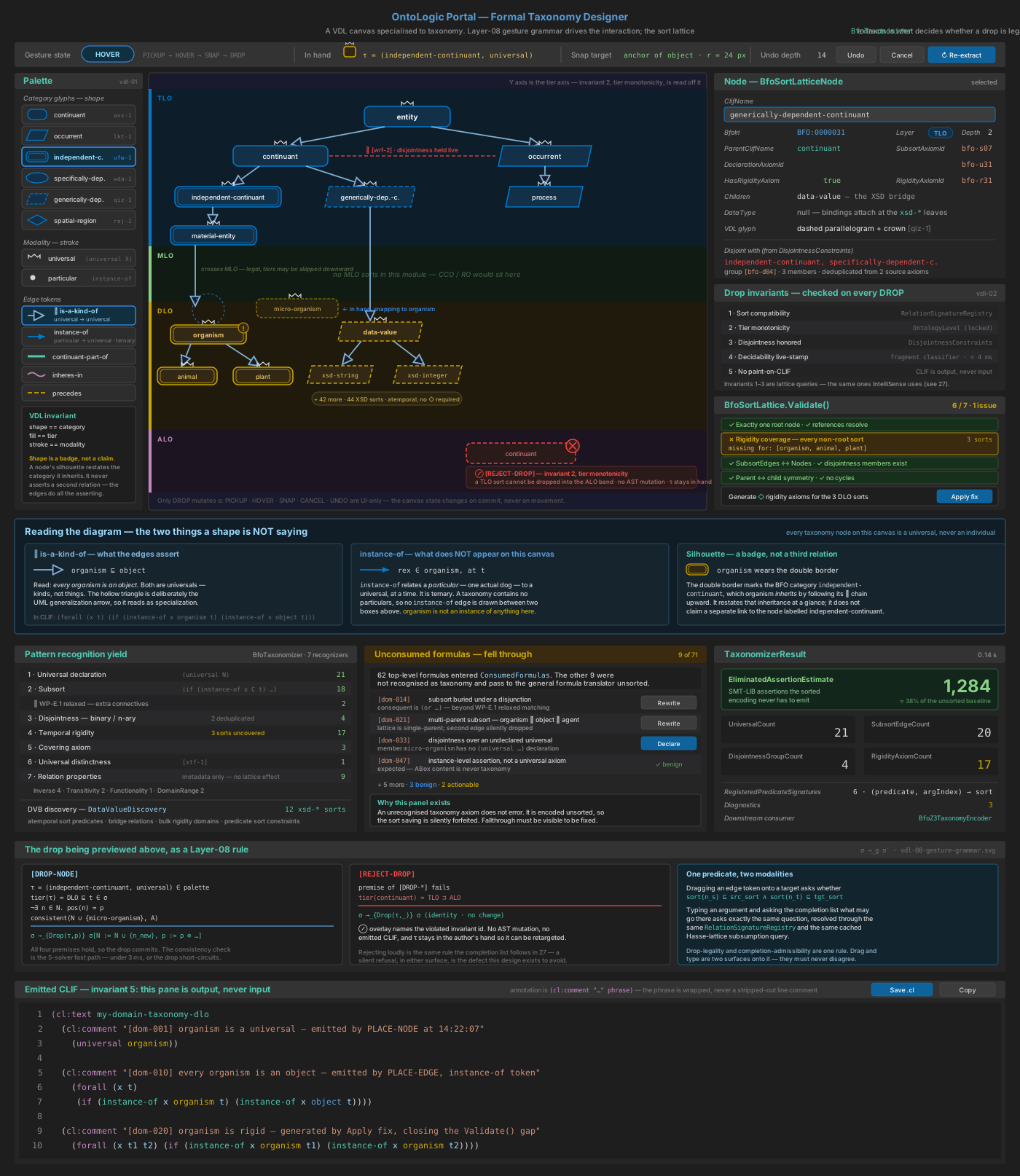
A logician can write logic directly. A domain expert can import what they already have or work on a visual canvas. The channel differs, the verification does not.
The four channels are direct authoring, format translators for existing ontologies, a code-level DSL, and a visual canvas that is still in development. All converge on the same verified representation.
Changes are tracked at the level of individual statements, so a review shows which piece of knowledge changed, not which line of a file moved.
Diffs at the axiom level, versioned against the module graph, so a reviewer sees the semantic change and its blast radius instead of a textual patch.
You find out a definition contradicts something while you are still typing it.
Powered by OntoMotion™Let anyone read what the system knows, and why a conclusion holds, in plain English.
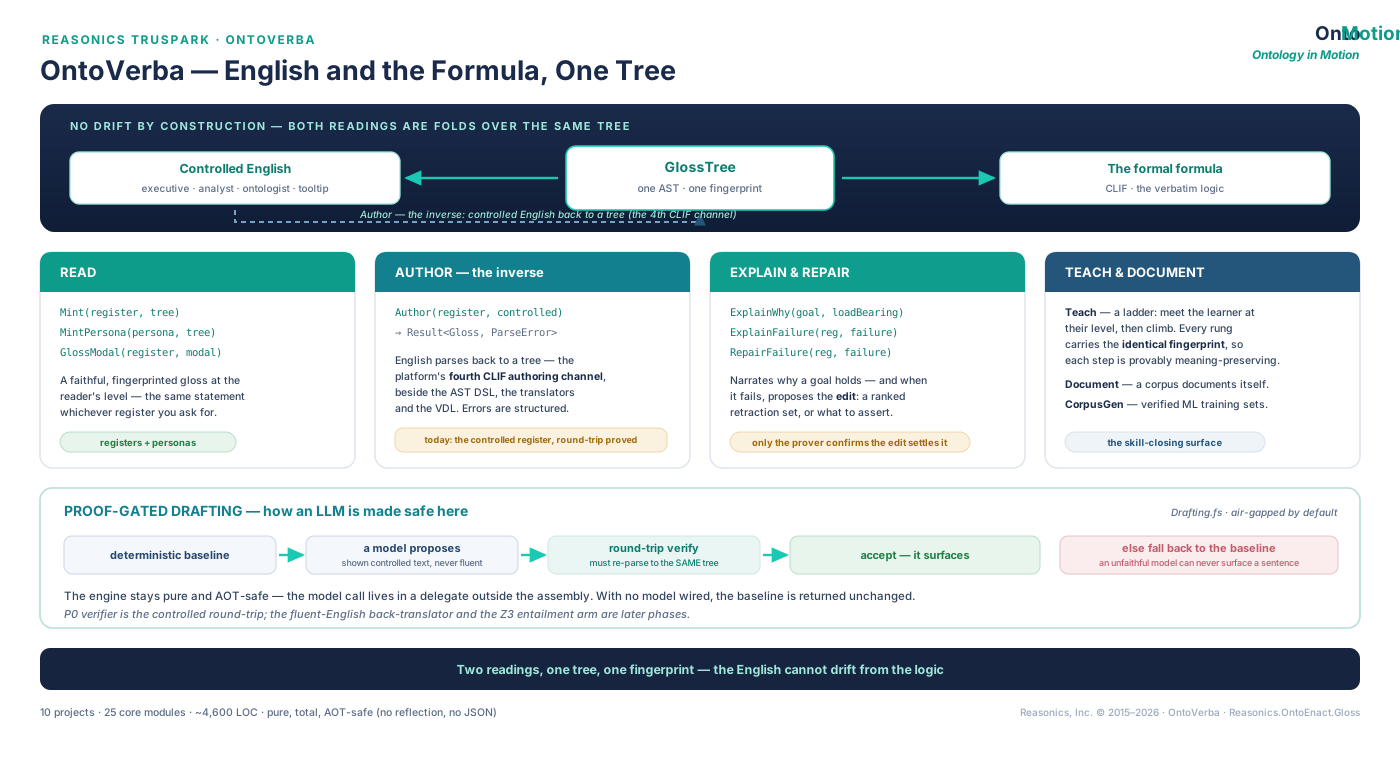
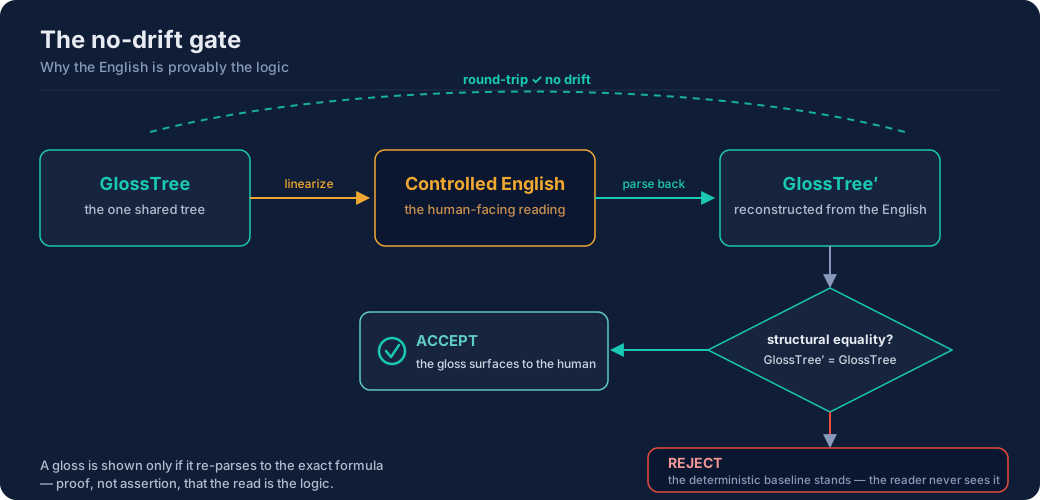
OntoVerba renders verified axioms and proof results into audience-tuned plain English that is guaranteed to re-parse to the exact formula it describes, so the explanation can never silently drift from the logic. It can also explain why a proof held, or why one failed, in the terms of your domain.
Three jobs, and each one removes a dependency on the handful of people who understand the model, so a conclusion can be reviewed, challenged, and repaired by the people accountable for it.
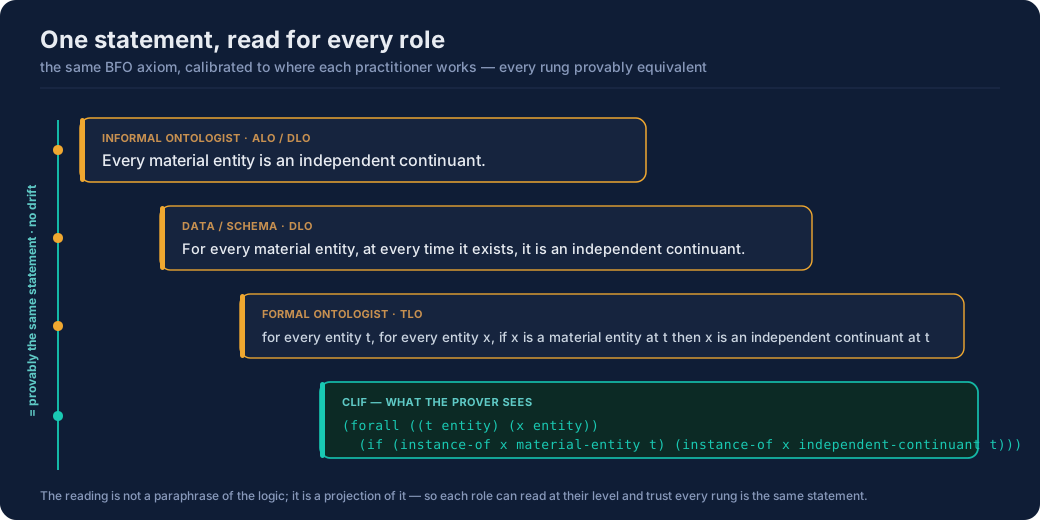
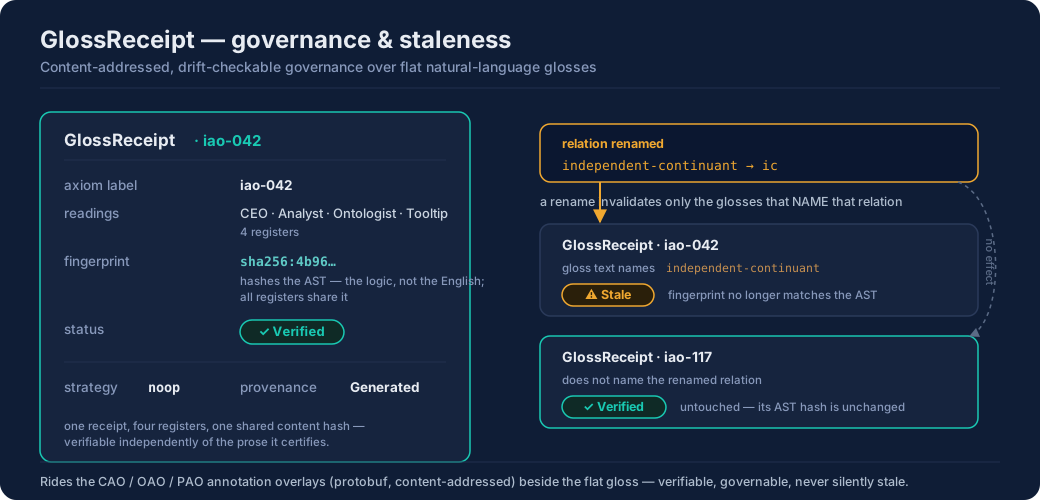
One definition, rendered for whoever is reading it, an executive, an analyst, an ontologist, or a tooltip in an application. Four audiences, four readings, and they cannot disagree with each other.
Every register is generated from the same proved statement and carries the same fingerprint, so an executive summary is provably the same claim as the formal logic beneath it, never a paraphrase somebody wrote once and stopped maintaining.
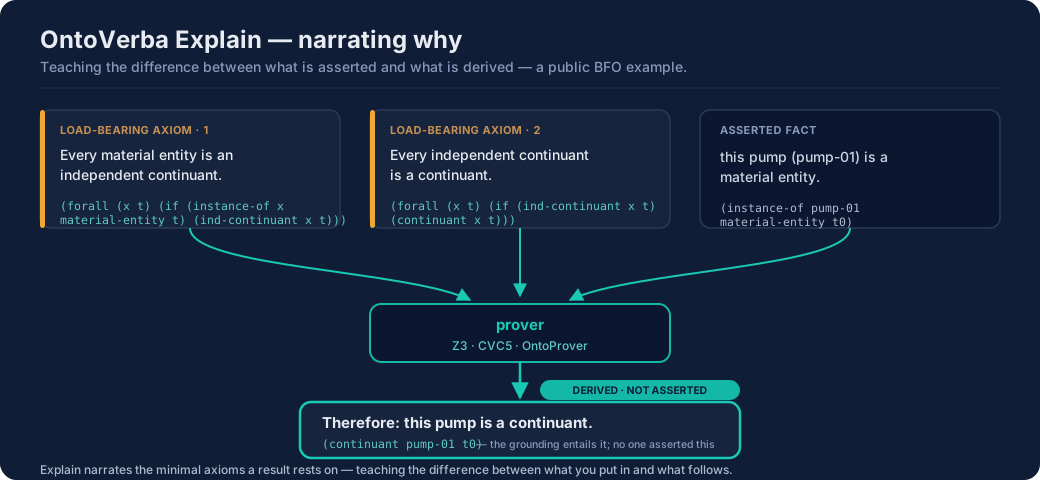
When a conclusion is challenged, the reasoning is narrated step by step, naming the specific statements the conclusion depended on instead of dumping the whole proof.
Each step is narrated by the inference rule that justified it, over the load-bearing axioms only. The explanation names which prover decided the question, so every decision has a name against it.
A failure is not a dead end. Conflicting statements are identified as a set, because no single one of them is at fault, and you are offered ranked ways to resolve it.
Repairs are proposed as ranked retractions, and the theorem prover confirms whether the chosen edit actually settles the question. The suggestion is never the verdict.
sha256:9f3c…a17didentical for all four readingsThe readings above cycle. The fingerprint does not. Each is generated from the same proved statement, so the executive line cannot drift from the logic underneath it. This is a real axiom from the BFO 2020 corpus. Why it cannot drift →
The executive summary and the formal logic are the same sentence, written twice.
Powered by OntoMotion™Sequent and Tessera are part of every TruSpark deployment. Each is also being made available as a standalone offering for organizations that need just that capability. Both are available today inside TruSpark. The standalone packaging is in development.
Sequent and Tessera are themselves BFO CLIF ontologies, compiled to code through the same proof-gated pipeline TruSpark runs on your knowledge. Neither is a hand-written engine sitting beside the compiler. Their behaviour is generated from formal definitions that a theorem prover accepted first.
This is the part worth checking us on. The workflow engine that proves your processes was itself proved. The licensing layer deciding what your organization may run is itself a compiled ontology, never a configuration file. If the method did not hold up, it would have failed on our own products first.
Prove a business process is sound before it ever runs.
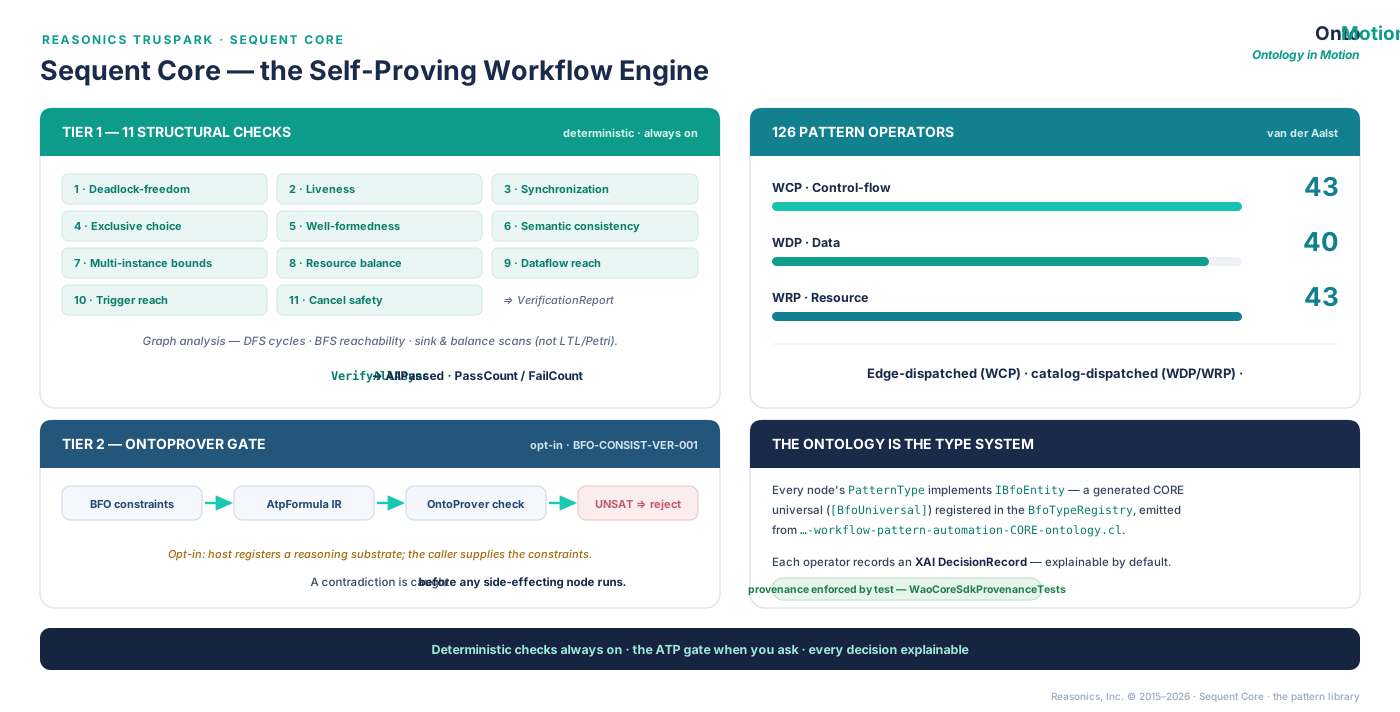
The Workflow Automation Ontology treats workflows as formally defined knowledge, so a process can be proved coherent at design time, a required step cannot be skipped, an approval genuinely precedes the action it authorizes. None of that waits for production to reveal it.
A process is checked for structural faults the way a compiler checks code, so the flaws that normally surface as an incident are caught while the process is still a design.
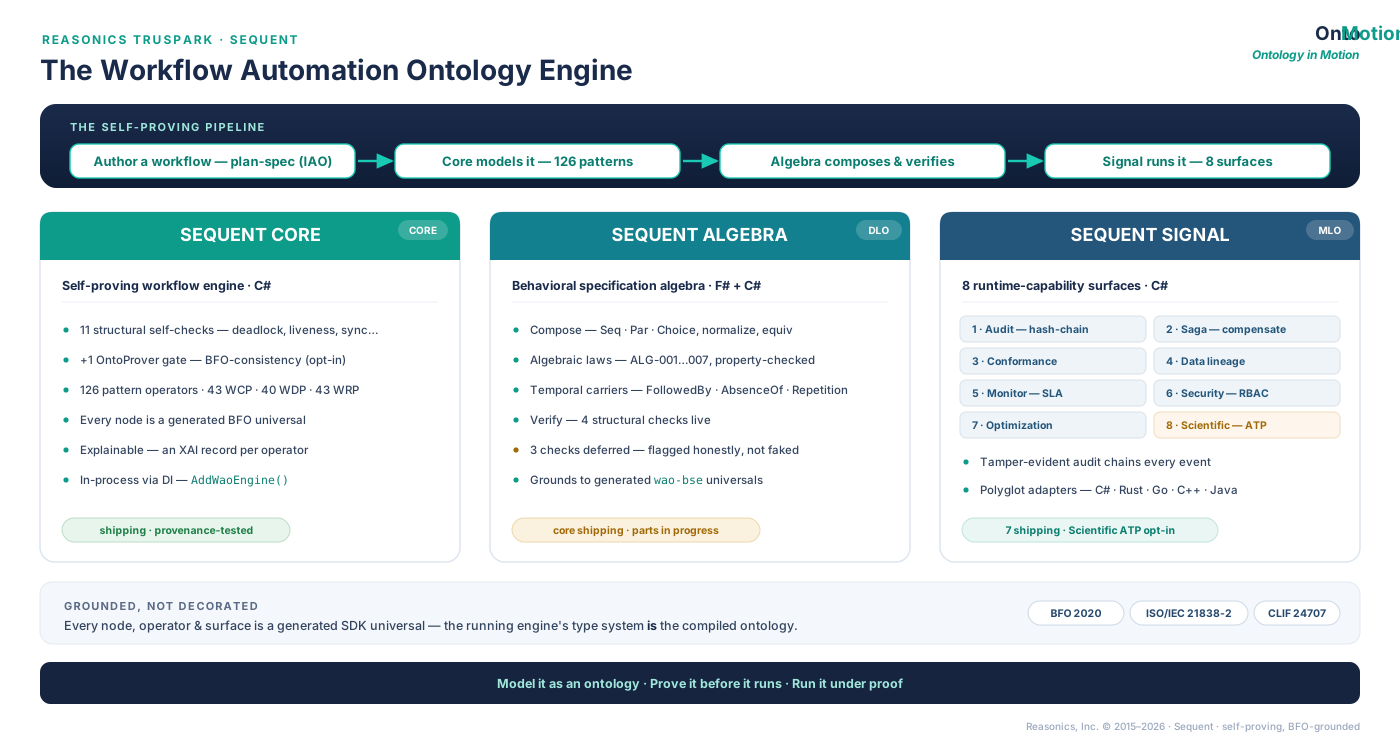
Sequent Core. Eleven structural self-checks cover deadlock, liveness, and synchronization, with an optional theorem-prover gate for full ontological consistency. Underneath is a library of 126 workflow pattern operators drawn from the established control-flow, data, and resource pattern catalogues, so the coverage is measured against published research instead of a list we wrote ourselves.
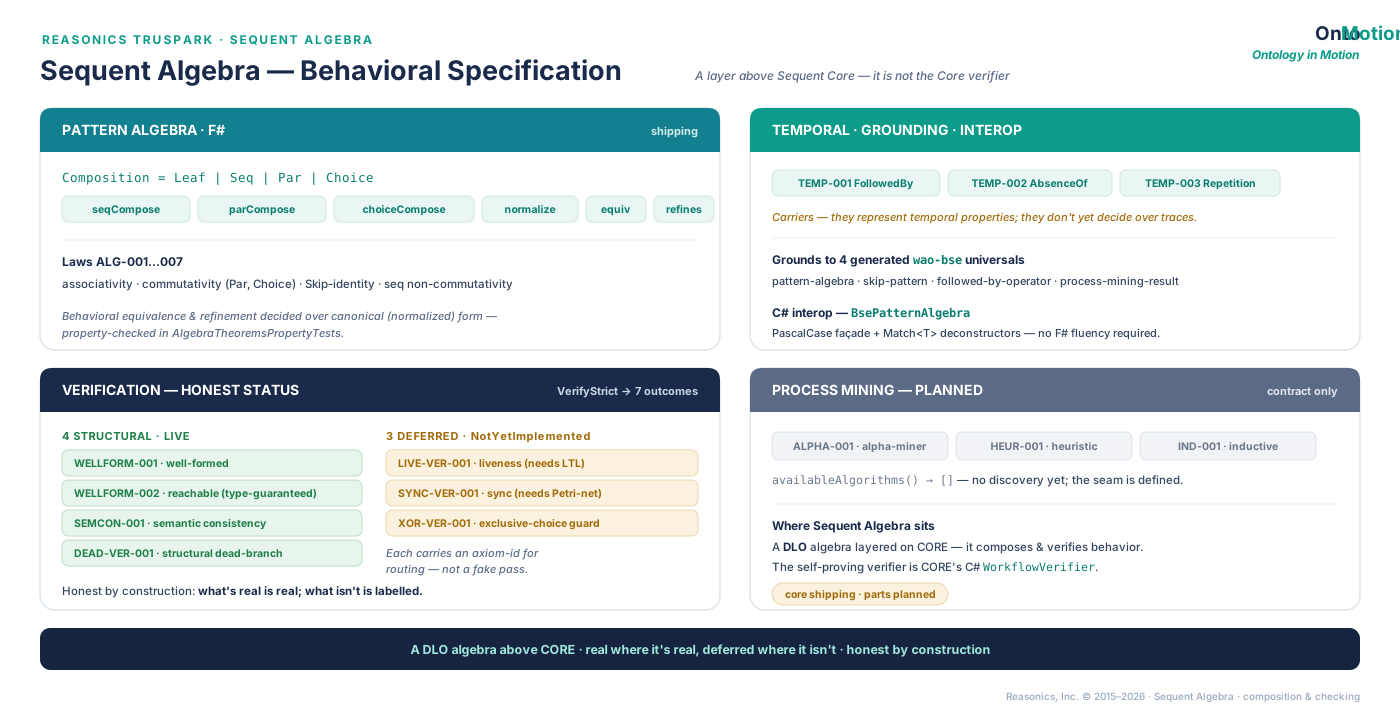
Smaller proved processes combine into larger ones, in sequence, in parallel, or as a choice, and the combination is verified again. So a process built from trusted parts is not assumed to be sound. It is shown to be.
Sequent Algebra. A behavioral specification algebra composes, normalizes, and tests processes for equivalence, with property-checked algebraic laws and temporal carriers for ordering, absence, and repetition. Four structural checks are live today; three more are specified and deferred, and we say so plainly instead of implying they run.
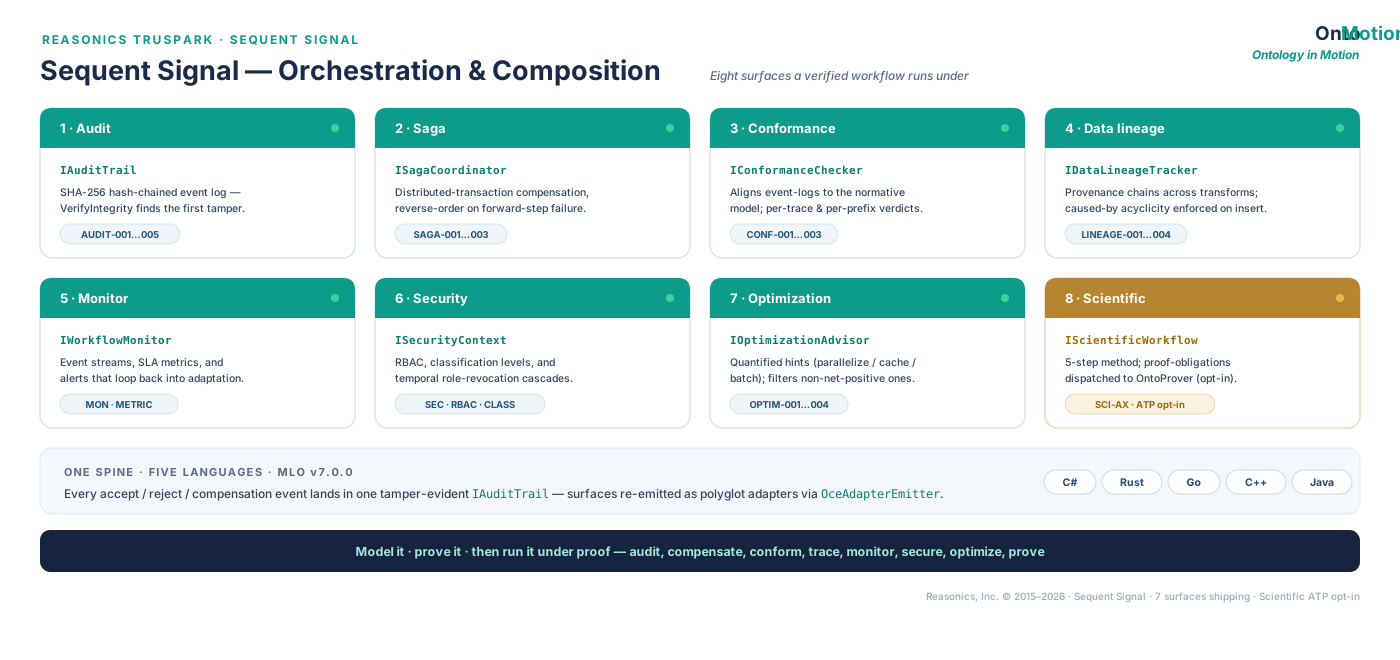
Sequent Signal. Eight capabilities are active during execution, so the evidence an auditor asks for is produced while the process runs, never reconstructed afterwards.
If the process can deadlock, you hear about it at design time.
Powered by OntoMotion™Grounds and proves the workflows that orchestrate a TruSpark-based application.
Brings provable, auditable workflow automation to organizations that are not yet compiling their whole knowledge base with TruSpark.
Protect the software and knowledge you build, and govern exactly what is deployed.
Tessera expresses licensing as formally verified knowledge. It governs which capabilities, SDKs, languages, and deployment targets an organization is entitled to use, and protects the SDKs, ontologies, and applications you produce with machine-bound tokens and a full audit trail.
It is how TruSpark itself is licensed, and how you govern what you build on it, the operational detail lives on Deployment & Integration → Licensing and Entitlements. Pricing, editions, and commercial packaging are handled during the Founding Partner conversation.
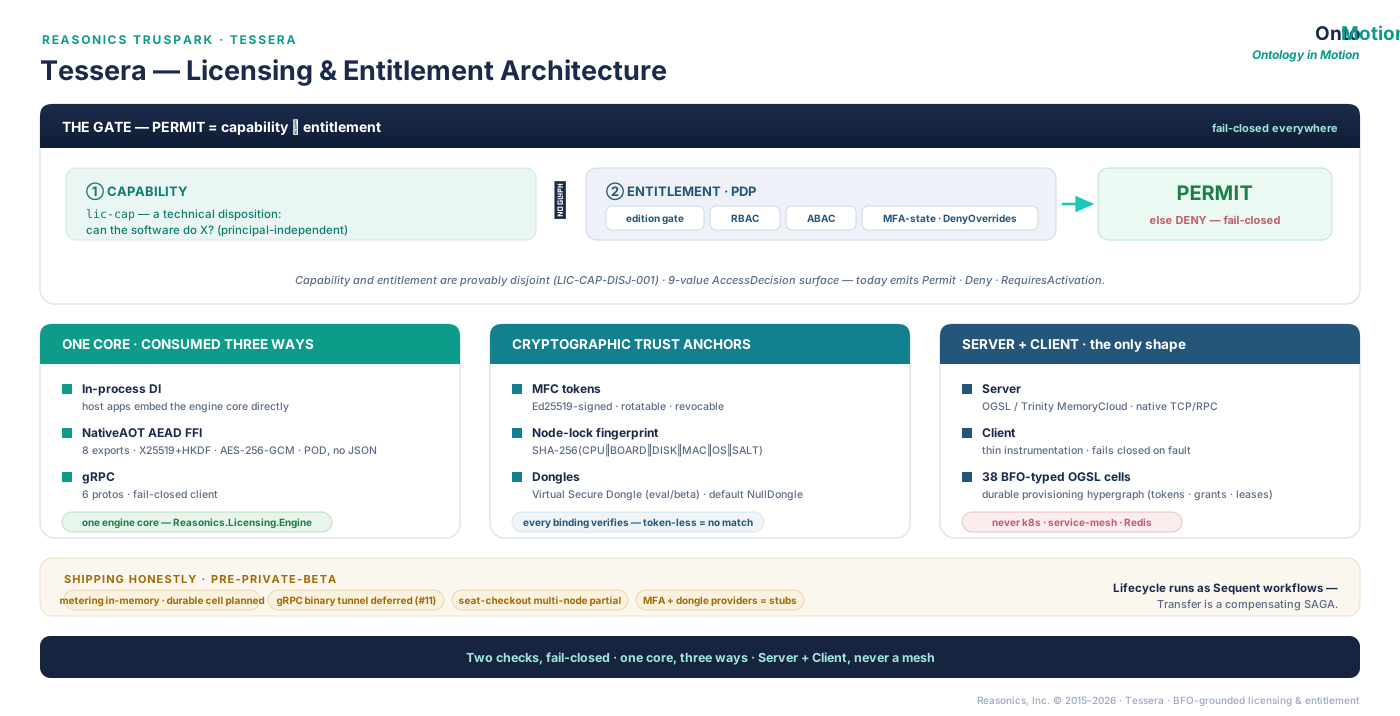
Two questions are asked before anything runs, and both must pass. If either is unanswered, a lapsed license, an unreachable check, a fault in the middle, the answer is no. Nothing is permitted by omission.
The two questions are formally proved to be disjoint, so a technical capability can never be mistaken for a commercial permission, the failure that lets someone use a feature simply because the software happens to support it. Entitlement itself is decided by a policy point combining edition, role, attributes, and authentication state, where any deny overrides any permit.
Tokens are cryptographically signed and can be rotated or revoked without reissuing software. Machine binding derives a fingerprint from the host’s own hardware and operating system, and every binding is verified on use, so a copied license does not travel to another machine.
Issuing, transferring, and revoking run as verified workflows on the same engine as everything else. A transfer that fails partway unwinds cleanly instead of leaving a seat stranded between two owners.
Lifecycle operations execute as Sequent workflows, with transfer implemented as a compensating transaction. Provisioning state — tokens, grants, and leases, is held in the same BFO-typed graph as the rest of the platform, so entitlement history can be queried instead of dug out of a log.
Both questions have to answer yes. Silence answers no.
Powered by OntoMotion™Governs entitlements across TruSpark and protects everything you build on the platform.
Gives software vendors a verifiable licensing and entitlement layer they can apply to their own products.
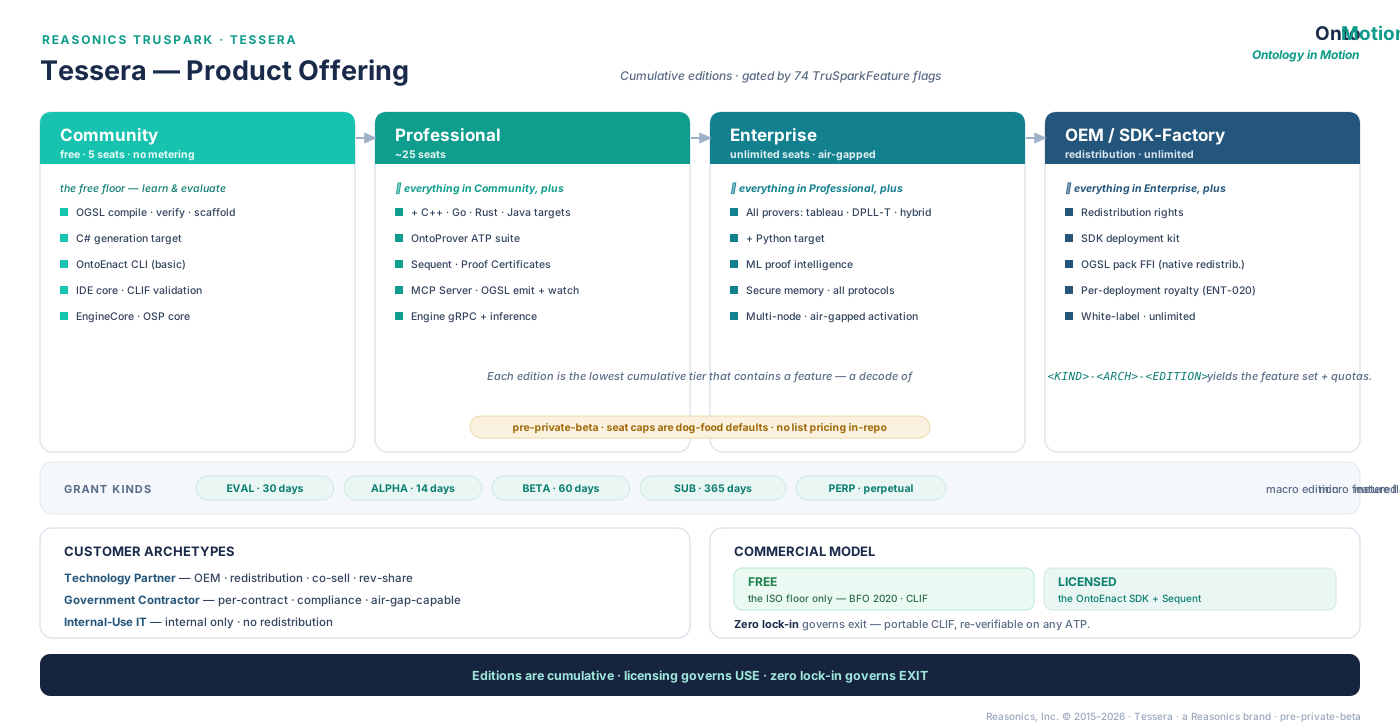
Every TruSpark technology is governed through licensing and entitlements, your entitlements determine which capabilities, SDKs, languages, and deployment targets your organization is provisioned to use. Pricing and editions are handled during the Founding Partner conversation; how entitlements are enforced at deployment is covered on Deployment & Integration.
The verified core, delivered as build-ready software, a development tool and a monetizable asset.
From one verified theory, OntoEnact emits build-ready SDK libraries in C#, Java, Go, Rust, C++, and Python. They are dual-use: your teams build internal software on a verified core, and — governed by Tessera. You can package, license, and embed those SDKs as products you sell to others. So the SDK is both a development tool and an asset you can take to market.
This is the thing your organization actually ends up owning. It arrives in two parts, in whichever of six languages your teams work in.
A real library in your language — entity classes, queries, and validation — installed through the package manager your team already uses. Not a wrapper around a service, and not a stub.
Each language ships with a pinned, public toolchain manifest — NuGet, Cargo, CMake, Go modules, Maven and Python packaging, with no phantom dependencies, plus registries, query providers, and staged native bindings for cross-language calls.
An interactive console ships with every SDK, in all six languages. A new engineer can browse the knowledge and watch reasoning actually run before writing a line of code.
It browses the entity hierarchy, runs validation, queries the knowledge base, and drives live reasoning. In practice it is the fastest way to bring someone new onto the model, and it costs nothing extra. It is generated alongside the library.
Every target is generated from the same verified source, so the meaning is identical in all six, your teams work in the language they already know, not one we imposed.
Most organizations will build internal software on the verified core. But the same SDK can be packaged, licensed, and embedded in products you sell, so formalizing your domain knowledge can earn revenue as well as reduce risk. The knowledge and the SDKs remain yours.
What you receive is source in your own language, and it is yours to license onward.
Powered by OntoMotion™Where each role enters the process is covered under Who Uses TruSpark.
TruSpark is in Private Beta. We label what is shipping today and what is still in development, plainly and in one place, so you always know what you can rely on now and what is on the way. This list is the reference the rest of the site points to.
ontoenactc command-line driverThe whole platform, scriptable from a shell.A walkthrough uses a definition or rule from your own domain, so you can judge which pieces of the portfolio your teams would actually use, and what your developers would receive.
Request a Demo