One Proved Theory, Two Compilers
A verified theory is compiled twice, for two different purposes. Naming them apart matters, because they take different inputs, produce different outputs, and target different languages.
Compiles BFO CLIF into the software your teams build on.
Compiles the graph schema the runtime engine executes against.
.ogsl schemas and .cl theoriesThe bridge between them. A CLIF-to-OGSL emitter projects the verified theory into an OGSL schema, so the graph structure is derived from the same proved axioms the SDKs came from instead of modelled a second time by hand.
That is why the target counts differ, and the difference is deliberate. Six is the SDK surface, where a developer consumes entity types and queries. Five is the graph surface, held to statically typed targets with zero-copy memory access. A dynamically typed target would receive the names and lose the guarantees.
ontoenactc — Proved Theory to Native SDKs
This is the compiler behind the deliverable. It loads the module graph, puts the assembled theory through the prover gate, and only then emits. Nothing downstream of the gate runs if the gate does not pass.
- Validate and load. The ontology registry is read and the module graph resolved, transitive dependencies included.
- Verify. The assembled theory goes to the prover portfolio. This is the gate: a failure stops the run rather than warning and continuing.
- Emit canonical CLIF. The authored theory is written back in normative form, so what was proved and what is published are the same text.
- Generate SDKs. Six languages from one verified source, carrying entity types, registries, query providers and validation logic.
- Generate consoles. A Knowledge Explorer ships beside every SDK.
- Bind and package. NativeAOT C-ABI bindings, then per-language packages and publication to the SDK store.
ogslc — Proved Theory to Graph Schema
Only after a theory is proved does the compiler run. It extracts the verified axioms, resolves the BFO module system, and lowers everything to a common intermediate form before any target-language code is emitted, so the software your teams build on is generated from the proof itself, never hand-transcribed from it.
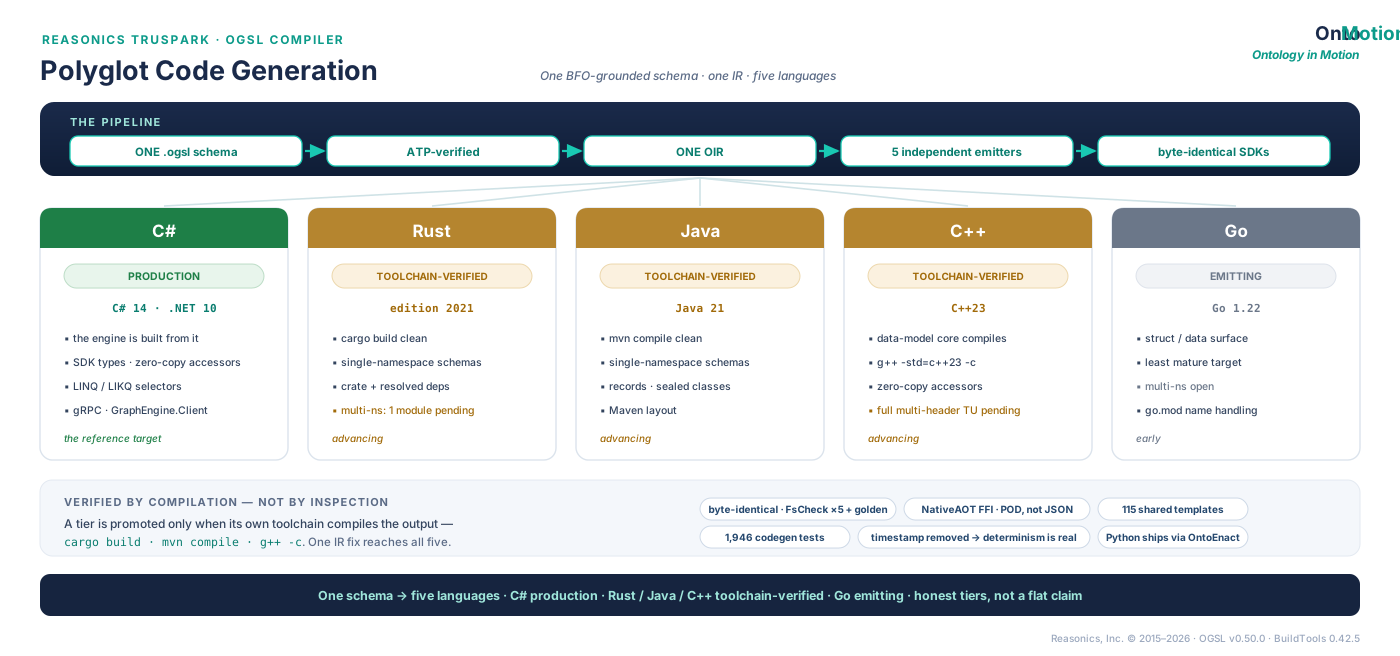
ontoenactc, for the reason set out above.Because the compiler knows which fields are edges and which are nodes, it can generate the traversal work instead of leave it to you. Thirteen algorithms are emitted for each of the five targets, against the same zero-copy accessors as the rest of the schema:
Breadth-first and depth-first search · shortest path · weighted shortest path · topological sort · strongly connected components · connected components · PageRank · community detection · minimum spanning tree · maximum flow · minimum cut · cycle detection
The point is not the list, which any graph library can match. It is that these are generated against your schema, so they operate on your own entity types rather than on an untyped node-and-edge abstraction you have to map back to your domain afterwards.
The OGSL Compiler — ogslc
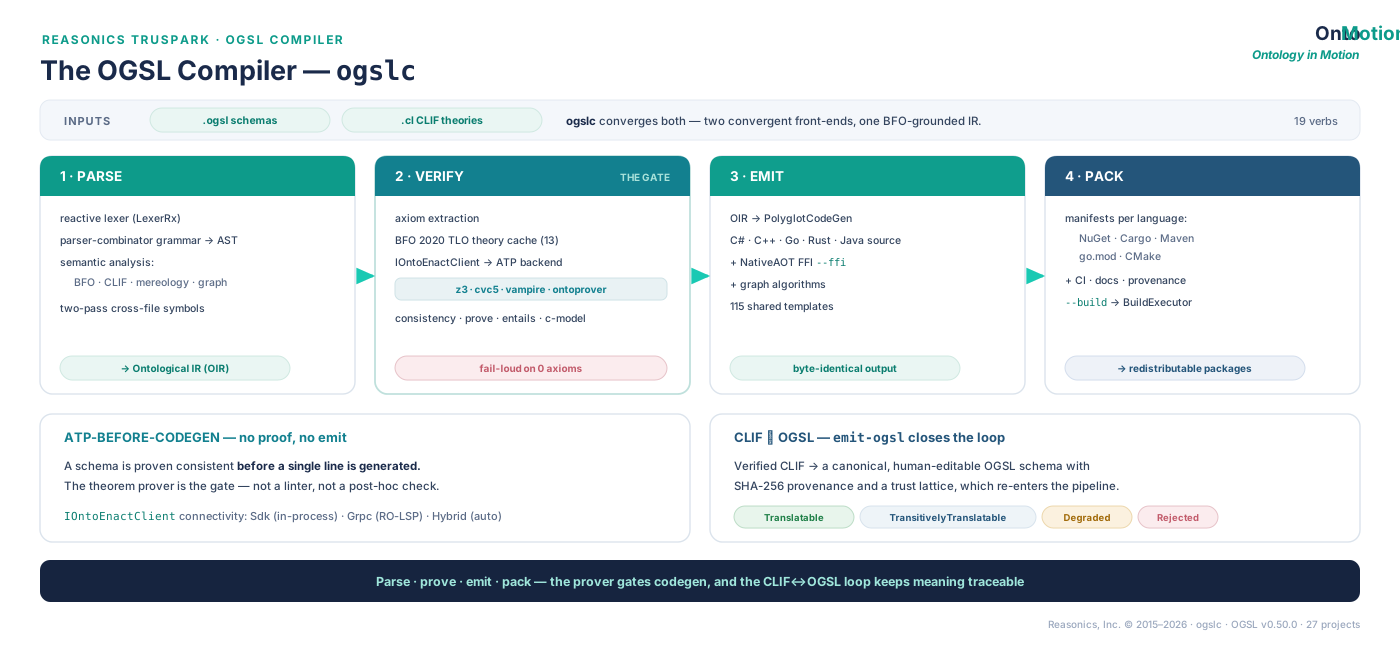
Four stages, run in order, with the theorem prover standing between the knowledge and the code. No proof, no emit.
A schema is proved consistent before a single line is generated. The theorem prover is the gate, not a linter, and not a check run after the fact when the code already exists.
How it works
The compiler reaches the prover through a client interface that supports in-process, gRPC, and automatic hybrid connectivity, so the same gate holds whether verification runs on a developer’s machine or against a shared service.
Verified CLIF converts back into a canonical, human-editable schema that re-enters the pipeline, so knowledge can be refined by the people who own it without leaving the verified path. Every conversion is graded for how faithfully meaning survived:
How it works
Emitted schemas carry SHA-256 provenance and a trust grade, so a downstream reader can tell whether a definition translated cleanly, translated through intermediate steps, lost fidelity, or was refused outright, instead of discovering the loss later.
If the theory does not prove, there is nothing to ship.
Powered by OntoMotion™